Indian agriculture is large. The farmer’s ecosystem is fragmented.
Today a farmer has to manage inputs, advice, equipment, records, certification, aggregation and selling as separate dealings with separate people. Seed and fertiliser are bought on credit, and nobody notes what went on the field. Advice comes when someone happens to visit. A drone or a tractor is hired at short notice, if one can be found. Field records live in a notebook or in memory. And the crop is usually sown before anyone has asked what buyers want.
All of this costs money. Every deal is small and expensive, farming practice varies from plot to plot, and lots are too small to bargain with. The farmer loses on the price, and the buyer gets supply that cannot be checked.
- Market
- Crop
- Farmer
- Inputs
- Services
- Production
- Aggregation
- Buyer
A local hub where the farmer finds everything in one place
Each Ashray Kisan Hub is a physical centre within easy reach of the farmers it serves, with every service they deal with under one roof.
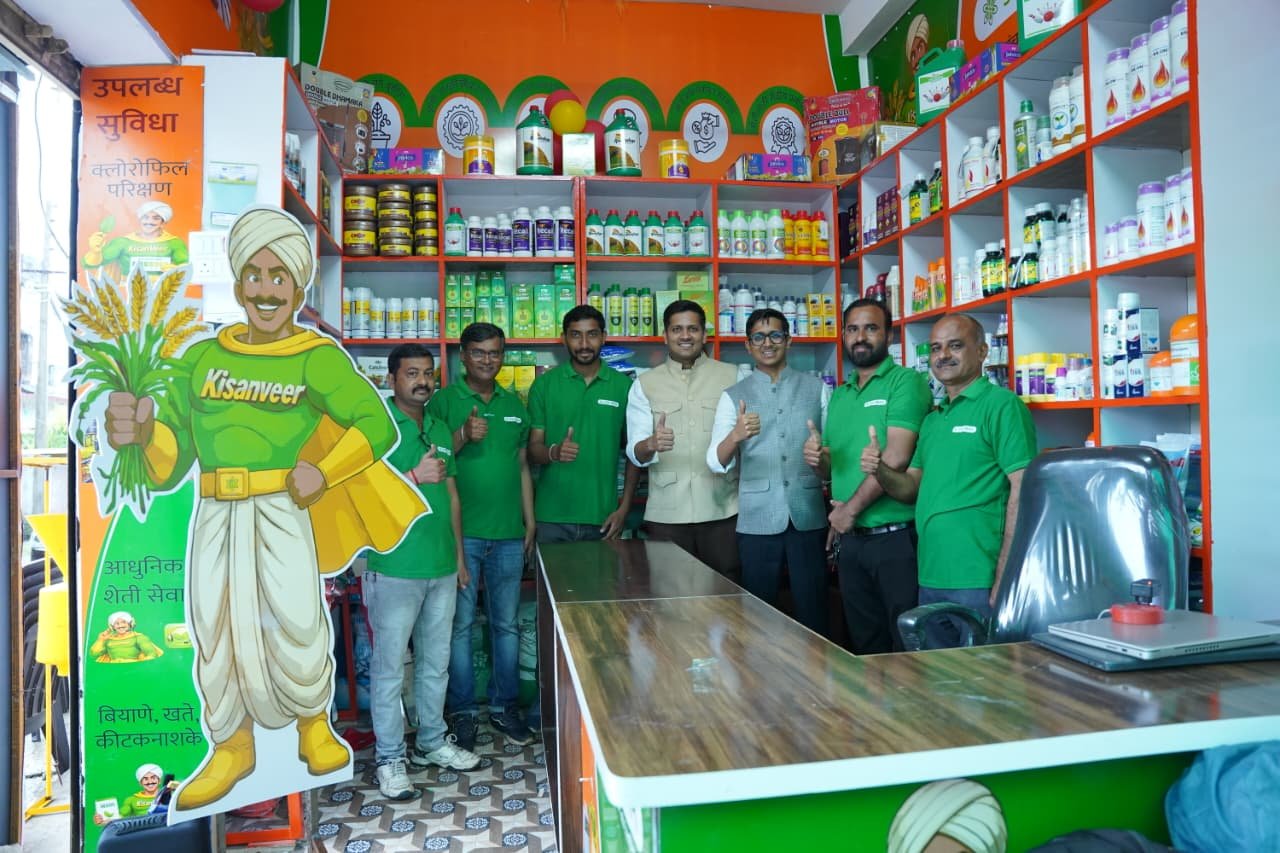
Quality seeds, nutrition, crop protection and biological products.
Soil testing, agronomy, drone spraying, machinery and implement access.
Choosing what to grow based on agronomy, economics and market demand.
Planned acreage for medicinal plants, millets and other market-linked crops.
Farm-practice history connected to accredited certification bodies.
Collection, sorting, grading, storage, batching and dispatch at the hub.
Direct lines to processors, B2B buyers, exporters and brands.
A structured digital record of what happened on every field, every season.
We think the next big change in Indian farming will come from linking up the services around the farmer.
Get one cluster right, then repeat it.
Farming is local. An agronomist five hundred kilometres away is of little use; the farmer needs one who can come to the field this week. The same goes for drones, machinery at the right time of the season, inputs, soil testing, and a collection point near enough that transport does not eat the margin.
So we grow by density rather than by spreading thin. Each hub covers a tight local cluster where agronomy, drones, shared equipment and collection all make economic sense. Once the model works in one cluster, we take the same setup to the next.
One farmer. One network. One connected journey.
- Seed
- Soil
- Crop
- Services
- Farm Diary
- Harvest
- Sorting
- Buyer
- Payment
Our aim is a long working relationship with each farmer. Over time, a farmer in the network gets access to:
A written history for every farm
The Farm Diary records each event on a field through the season, in a fixed format that can be searched and shared. The longer a farm uses it, the more useful its history becomes.
Crop and variety, sowing date, seed source and lot, soil-test results.
Fertiliser applications, irrigation events, growth stages, field observations.
Pest and disease scouting, crop-protection inputs, drone spray records.
Harvest date and quantity, quality parameters, labour and equipment, dispatch.
The Farm Diary does not certify anything. It gives an accredited certification body the practice records it needs; checking them and issuing the certificate is their job.
Records are kept only with the farmer’s clear consent and under set data rules. Farmers can always see their own records.
From “what should I grow?” to “what does the market need?”
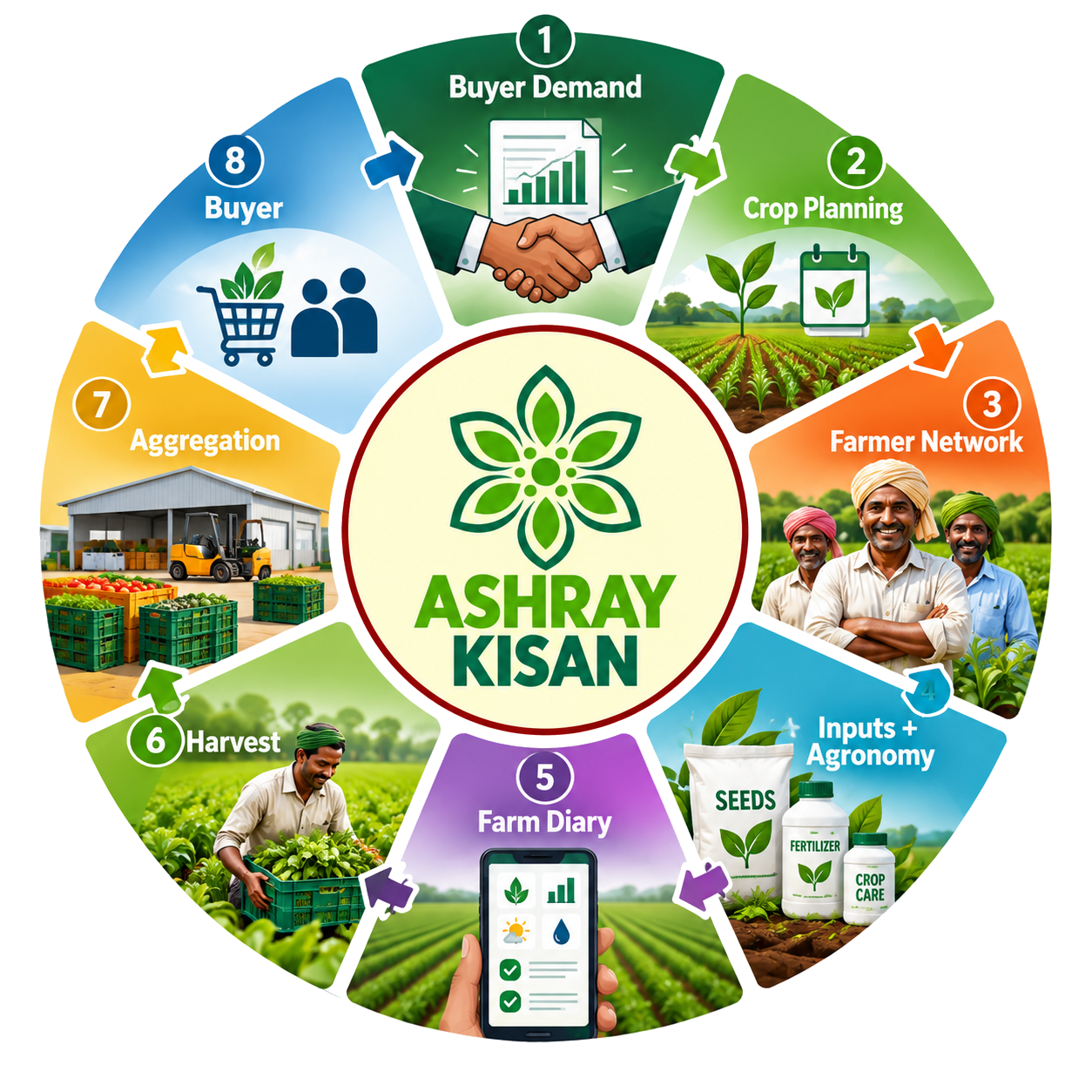
Usually a farmer grows a crop, harvests it, and only then looks for a buyer. We start from the other end.
- Farmer
- Grow Crop
- Harvest
- Search for Buyer
- Buyer Demand
- Crop Planning
- Farmer Network
- Inputs + Agronomy
- Farm Diary
- Harvest
- Aggregation
- Buyer
Buyer-specified species and quality, with documented inputs and provenance.
Demand-led acreage for processors and brands, planned before sowing.
Grown under organic rules, with the Farm Diary as proof for certification and better prices.
What protects us is density on the ground.
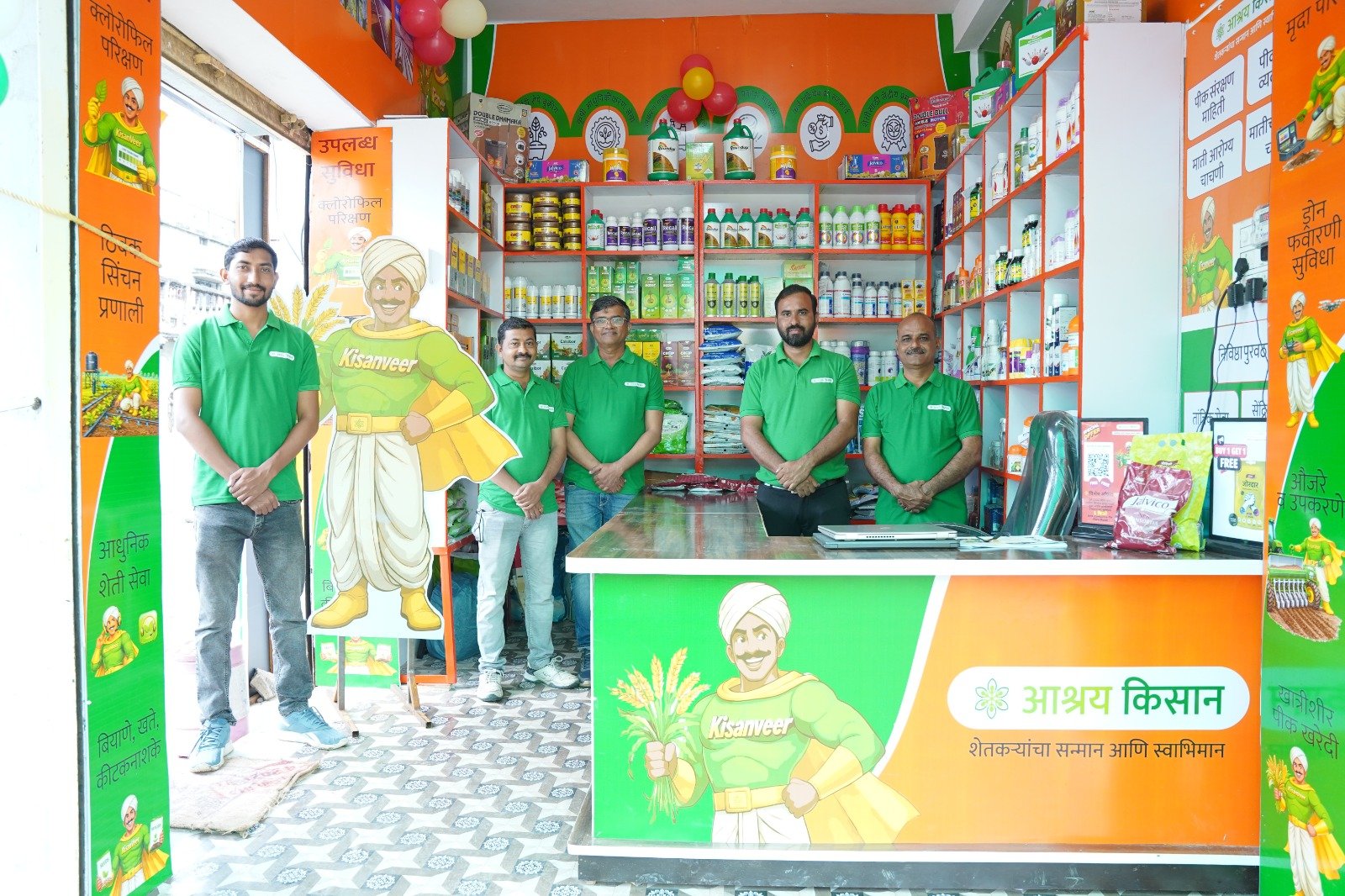
Farmers keep coming back to a hub they can walk into. An app on its own does not build that habit.
Agronomists, drones and machines are shared across many farms in the same cluster.
Many small farms together make acreage a buyer will take seriously.
Regular field visits build up records that a company working from a distance cannot collect.
Produce from many small farms is pooled at the hub into lots large enough to trade.
Processors, brands and B2B buyers find it simpler to buy from one organised source.
What we standardise is the cluster. When one works, the next one copies it instead of starting from scratch.
Several ways each hub earns
• Agricultural inputs: seed, nutrition, crop protection, biologicals
• Farm services: soil testing, agronomy, drone spraying, equipment
• Contract farming: margin on planned production
• Aggregation: collection, sorting, grading, market linkage
• Hub services: storage, packing and batching
• Certified & traceable produce: premium pricing on verified lots
• Digital advisory: subscription or partner-led services
• Data-enabled services: future optionality, with farmer consent
Detailed cluster-level unit economics are shared directly with qualified investors on request.
Why now
Buyers want steady volumes at a steady quality.
Buyers want to know how the crop was grown.
Drones, soil diagnostics and digital records are becoming affordable at scale.
Farmers need markets beyond the traditional commodity mandi.
Medicinal plants, millets and organic produce open new opportunities.
The gap between farm and organised market leaves room for distributed infrastructure.
The tools are now affordable and the farmers are already there. What has been missing is someone to bring the two together.
Build one well, then repeat it.
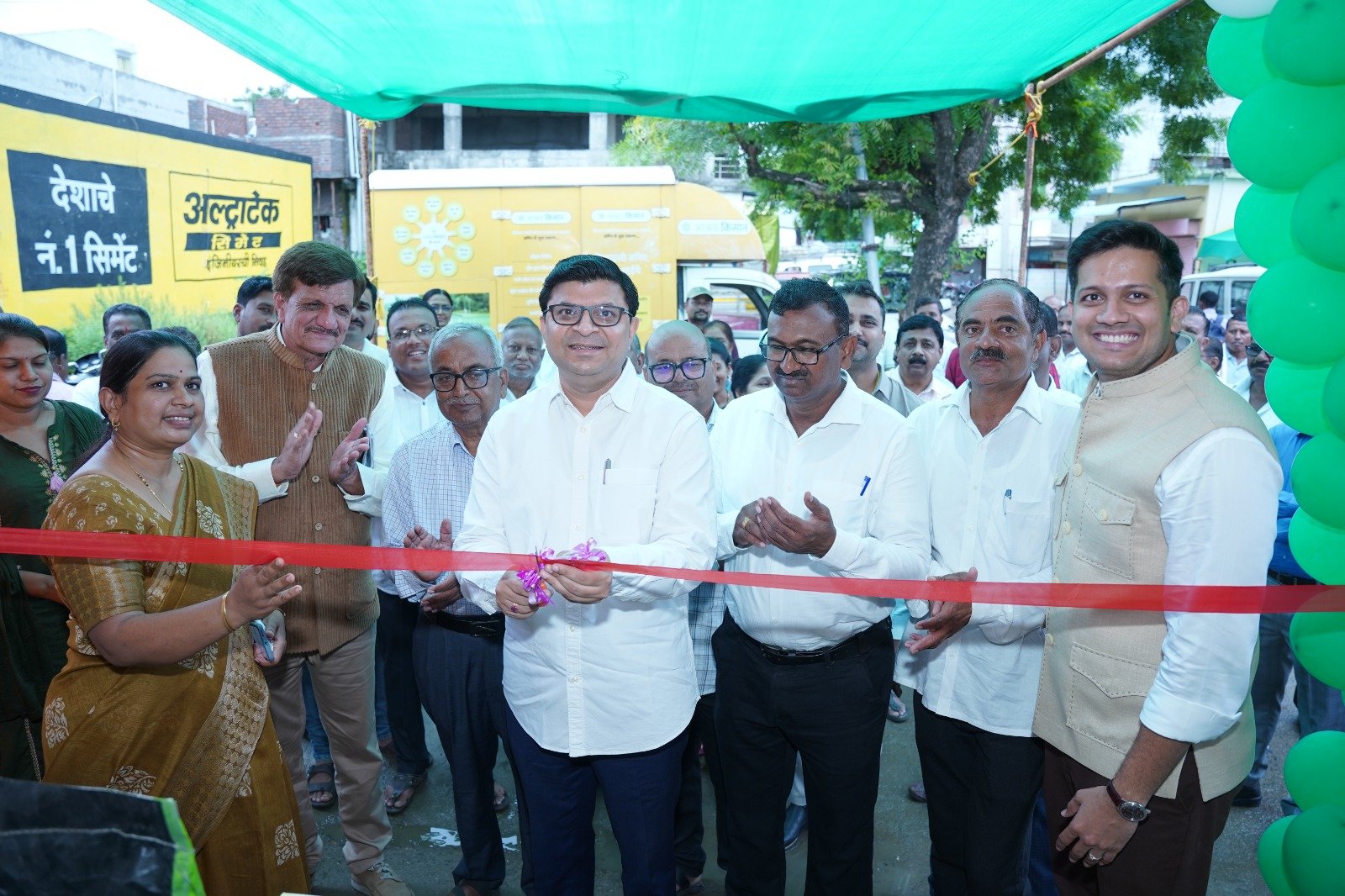
Establishes brand standards, operating process, farmer experience, service model, unit economics, technology, supply chain and the cluster playbook itself.
Comes only after the model is proven. We then open selected markets with partners.
Partners will take on a tested system for running an agri cluster.
- COCO
- Prove
- Standardise
- Partner
- Replicate
- Cluster
- Region
The cluster is the product.
What the round is for
The money will go into the physical setup each cluster needs, and into the systems that let us open the next one quickly.
Agri Hubs, aggregation points, storage, grading and packing.
Input inventory and the farmer procurement/operating cycle.
The Farm Diary platform, farmer records and traceability systems.
Agronomists, service teams, drones and equipment.
Buyer acquisition, crop programmes and certification.
Questions about the round, the model, or a visit to one of our hubs? We’d be glad to talk.
Start a conversation →The round size and split are discussed directly with the founders, so we have not put a number here.
Tell us a little about yourself below and we’ll follow up with the deck and next steps.